The FAA grounds Blue Origin New Glenn rocket after failure to put payload in orbit
ThinkingNews Desk · how this was written
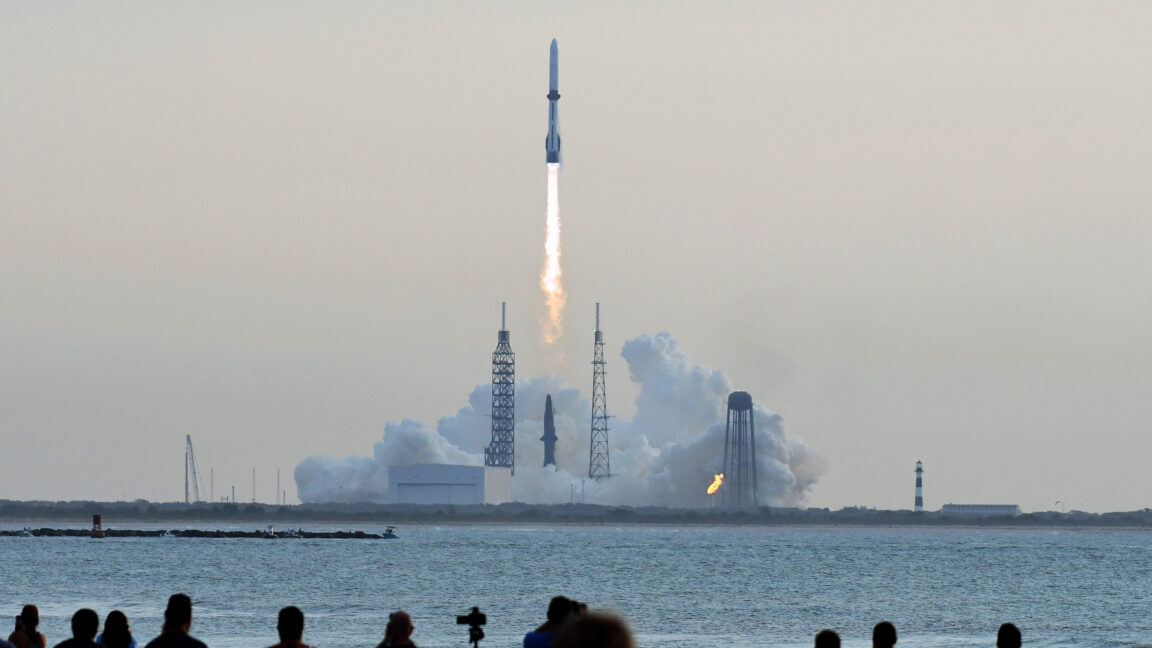
Blue Origin successfully reused its New Glenn orbital-class booster, landing the recycled first stage after a flight that ignited its seven methane-fuelled BE-4 engines. However, the mission failed to place the customer satellite into the intended orbit, prompting the FAA to ground the New Glenn launch vehicle pending further investigation.
Written from all 4 reports below, not from any single one.
How it was reported
- TechCrunch·Blue Origin successfully re-uses a New Glenn rocket for the first time ever
- Ars Technica·Blue Origin's rocket reuse achievement marred by upper stage failure
Blue Origin's New Glenn launcher achieved its first successful reflight of an orbital-class booster. The 321-foot-tall rocket ignited its seven methane-fueled BE-4 engines, accelerating past the speed of sound. The upper stage failed after the booster separated.
- TechCrunch·Blue Origin’s New Glenn put a customer satellite in the wrong orbit during its third launch
Blue Origin's New Glenn placed a customer satellite in the wrong orbit during its third launch. This failure may impact Blue Origin's plans to aid NASA's Moon mission. The incorrect orbit occurred during the launch.
- The Verge·Blue Origin successfully reused its New Glenn rocket
- Engadget·Blue Origin landed its recycled New Glenn booster but failed to put payload in orbit
- The Verge·Blue Origin’s New Glenn rocket grounded after delivering satellite to wrong orbit
- TechCrunch·FAA orders investigation into Blue Origin’s New Glenn mishap
- Engadget·The FAA grounds Blue Origin New Glenn rocket after failure to put payload in orbit
Related stories
- Blue Origin says fuel tanks and key pad components survived the New Glenn explosion, pledges to fly again this year3 outlets
- Blue Origin pauses space tourism flights to focus on the moon3 outlets
- Jeff Bezos’ Blue Origin enters the space data center game3 outlets
- Blue Origin’s satellite internet network TeraWave will move data at 6Tbps4 outlets