Meet a mouse whose brain cortex is made up of human cells
ThinkingNews Desk · how this was written
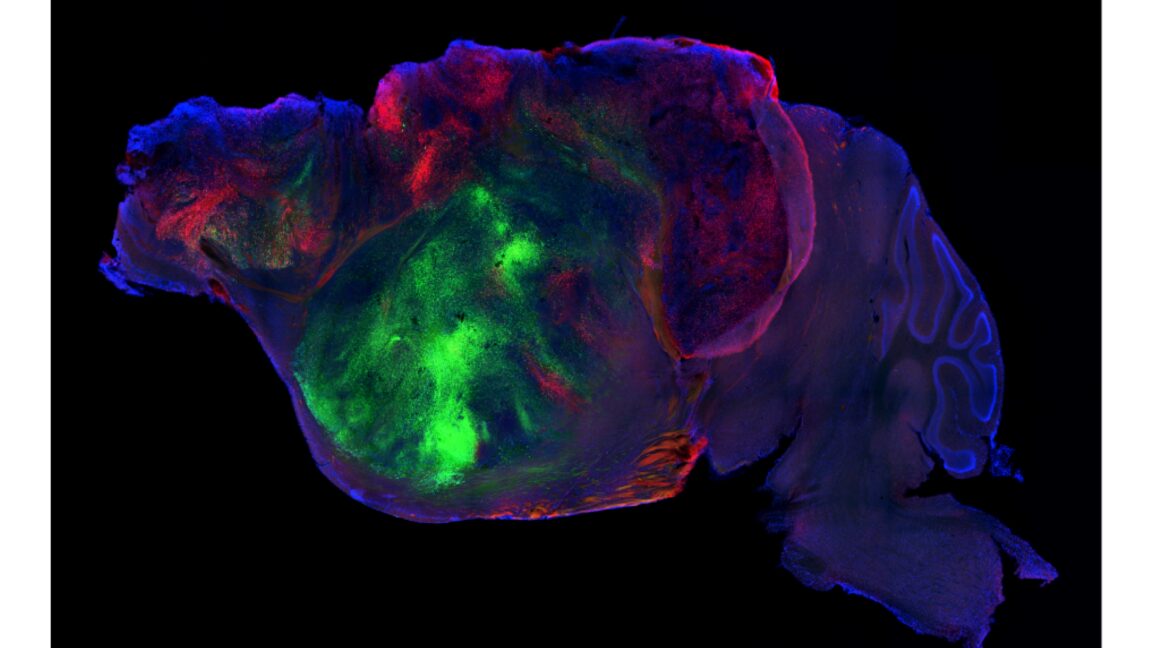
Stanford researchers engineered mice whose cortical and hippocampal cells were largely absent, then injected human neural organoids into the brains. The human cells grew to occupy about half the brain volume and integrated with the mouse nervous system, improving maze-based memory performance compared to the cell-deficient mice. This model offers a more natural platform for studying neurological diseases.
Written from all 3 reports below, not from any single one.
How it was reported
- MIT Tech Review·Meet a mouse whose brain cortex is made up of human cells
Researchers at Stanford engineered mice lacking most cortical and hippocampal cells, then injected human neural organoids into their brains. The human cells proliferated, occupying up to half the brain volume and improving maze-based memory performance compared to the cell-deficient mice. The study demonstrates that post-natal human neural tissue can integrate and function within a mouse nervous system, offering a model for brain injury research.
- Ars Technica·Researchers swap in human brain cells for a mouse's cortex
Stanford University researchers replaced a large portion of a mouse's cortex with human brain organoid cells to create a more natural model for studying neurological diseases. This method allows the human cells to integrate into a living brain environment, overcoming the limitations of isolated organoids that lack circulatory and immune system connections.
- Hacker News·Part-human part-mouse brain developed in science breakthrough
- MIT Tech Review·The Download: mice with part-human brains and climate tech innovators
Stanford researchers engineered a mouse whose cortex is 50% human cells, using genetically modified mice that fail to fully develop their brains to allow human organoids to survive and function, a step that could aid brain-injury studies. The MIT Technology Review’s 2024 Innovators Under 35 list highlights nine climate-tech pioneers developing lithium-extraction methods, a low-emission steel furnace, solid refrigerants, AI-driven energy-efficiency tools, pollution-tracking systems, and waste-to-materials conversions. Concurrently, U.S. lawmakers passed a bill shifting grid costs to data centers, while U.S. and Chinese experts propose AI safeguards, and OpenAI disclosed new misbehavior reporting rules.
Related stories
- Mice with human brain cells offer a tool to study disease. Ethicists ask: What's next?3 outlets
- An Anthropic researcher just gave us a peek at self-improving AI4 outlets
- Anthropic Life Sciences Head Eric Kauderer-Abrams says the AI company set up a Bay Area wet lab for physical biology work, as it pushes into AI disease research (Reuters)4 outlets
- OpenAI launches GPT-Rosalind, a specialised AI model for drug discovery and life sciences research5 outlets